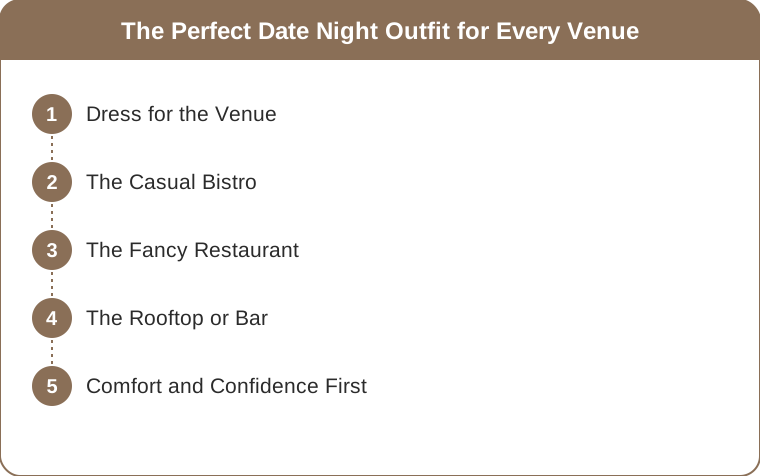
The Perfect Date Night Outfit for Every Venue
Quick Answer: Match the outfit to the venue, not to how dressed-up you feel like being. Casual bistro means elevated casual — good jeans, a pretty top, boots. Fine dining means a chic dress or sharp tailoring with real heels. Rooftop bar means something with edge and a wind plan. When in doubt, aim one notch above the venue’s baseline: slightly overdressed reads confident, underdressed rarely does.
You’ve been staring at the closet for eleven minutes. The date is in an hour. And the actual problem isn’t your wardrobe.
It’s that you don’t know what kind of night this is yet.
The perfect date night outfit isn’t a style question — it’s a reading-the-room question, answered before you leave the house.

Why Does the Venue Matter More Than the Outfit?
Because “appropriate” is what confidence is actually made of.
Being overdressed at a dive bar or underdressed at a tasting menu creates the same low-grade discomfort, and it runs all evening in the background. You spend attention managing the mismatch instead of enjoying the person opposite you.
Matching the setting removes that entire cognitive load. You stop thinking about what you’re wearing roughly ninety seconds after you sit down — which is exactly the goal.
Two minutes of research solves it. Look at the restaurant’s own photos on their website or Instagram. Look at what people in the background are wearing, not the styled shots. That’s your baseline.
Then aim one notch above it. Slightly overdressed reads like you made an effort. Underdressed rarely reads like anything good.
What Should You Wear to a Casual Bistro or Neighborhood Restaurant?
Elevated casual — the hardest category to get right because it has the least guidance.
The formula: one relaxed piece, one polished piece, one considered detail.
- Dark straight-leg or wide-leg jeans (relaxed) + a silk or satin top (polished) + ankle boots and a good earring (detail)
- A midi skirt (polished) + a fitted knit (relaxed) + loafers or low boots
- A shirt dress with a belt + boots + a structured bag
What to avoid: anything you’d wear to the office without changing, and anything that reads as trying too hard for the setting. A floor-length gown at a taco place is a story, not an outfit.
The goal is polished but not fussy. You want to look like you dressed for the person, not for the room.

What Do You Wear to an Upscale Restaurant?
This is where you go all out, and it’s the easiest venue to dress for because the rules are clearest.
Options that always work:
- A well-cut midi dress in a solid color with elegant heels
- Sharp tailoring — a blazer with matching trousers, a silk cami underneath
- A slip dress with a structured jacket over it
The details that separate good from great: proper heels rather than boots, a small structured bag rather than an everyday one, and one considered jewelry moment rather than four.
A practical note on heels. Fine dining means you’re seated most of the evening, which is the one context where a genuinely high heel is comfortable. Walk-in distance is the only variable — if there’s a ten-minute walk from parking, bring flats in the bag or choose a block heel.
Lean into the glamour. Upscale venues are one of the few remaining places where dressing up is the point.
What Works for a Rooftop Bar or Trendy Cocktail Spot?
Edge over elegance. And a wind plan.
The look: a slip dress, sleek separates with attitude, leather in some form, an interesting silhouette. Style over stuffiness wins here — this is where a bold piece belongs.
The three practical realities nobody mentions:
- Rooftops are 10–15 degrees colder than street level. Bring a jacket you actually like, because it will be in every photo and on your shoulders all night.
- Wind exists. A very short hemline or a floaty midi becomes a full-time management job. Weight and structure are your friends up there.
- The floor is often uneven. Decking, gravel, and outdoor tile eat stiletto heels. Block heels, platforms, or good boots.
Get those three right and you can be as bold as you like with the rest.
The 5 Mistakes Everyone Makes Dressing for a Date
- Wearing something brand new and untested. The tag comes off, and forty minutes in you discover the waistband digs when you sit. Wear things you’ve already sat down in.
- Not checking the walking distance. Beautiful shoes and a fifteen-minute walk from the subway are a combination that ends with you barefoot on a sidewalk.
- Dressing for the photo, not the evening. A look that photographs beautifully and is miserable at hour three is a bad trade.
- Ignoring the temperature inside. Restaurants over-air-condition in summer relentlessly. A sleeveless dress in August still needs a layer.
- Choosing an outfit that requires constant adjusting. A strapless top you tug every ten minutes pulls your attention away from the date all evening — this is the one people underestimate most, because it feels minor and isn’t.
How Do You Choose When You Feel Good in Nothing?
It happens. Two things reliably help.
Default to the tested outfit. The one that’s worked before. A previously-worn, already-comfortable outfit consistently produces more real confidence than a new one, purely because the discomfort variable is already known.
Do the sit-walk-reach test. Put the outfit on, sit down on a hard chair, walk across the room, reach for something overhead. Thirty seconds. It catches the problems a standing mirror check never will — which is where most date-night outfit regret actually comes from.
Whatever the venue, the best outfit is the one you stop thinking about. Confidence outshines any trend, and comfort is what confidence is built on.
Frequently Asked Questions
Is it better to be overdressed or underdressed on a date?
Slightly overdressed, almost always. It reads as effort and interest, and it’s easy to dress down on the spot — remove a jacket, take off jewelry, swap heels for the flats in your bag. Underdressed is far harder to correct once you’re there.
What should I wear on a first date if I don’t know the venue?
Ask. “Where are we going, so I know what to wear?” is a completely normal question and it solves the problem entirely. If asking isn’t an option, dark jeans with a silk or satin top and ankle boots is the highest-hit-rate default — it works in about 80% of date venues.
How dressy is “smart casual” for a restaurant?
Smart casual generally means no jeans with visible distressing, no sneakers, and no t-shirts — but tailored trousers, midi skirts, dresses, dark denim, and boots are all fine. Think “you’d be comfortable meeting your partner’s parents,” not “you’d be comfortable at a wedding.”
Should you wear heels on a first date?
Only if you’d wear them anywhere else for three hours. Ankle boots with a block heel, loafers, and elegant flats all read polished and none of them will have you limping. The confidence you lose to sore feet costs more than the height gains.
TL;DR:
- Check the venue’s own photos, note what people in the background wear, then aim one notch above it.
- Bistro: elevated casual — one relaxed piece, one polished piece, one considered detail.
- Fine dining: midi dress or sharp tailoring, real heels, small structured bag.
- Rooftop: edge plus a jacket, weighted fabrics, and block heels for uneven decking.
- Do the sit-walk-reach test before you leave. Comfort is what confidence is made of.
Keep Reading
This article is for general styling and informational purposes only. Trends, sizing, availability and pricing may vary by brand and season.