The Real Reason Some Date-Night Outfits Feel Confident and Others Don't
An outfit that looks great in the mirror at home can still feel oddly deflating an hour into an actual date, and the gap usually isn’t about how the outfit looks, it’s about a specific physical discomfort quietly working against confidence the whole time.

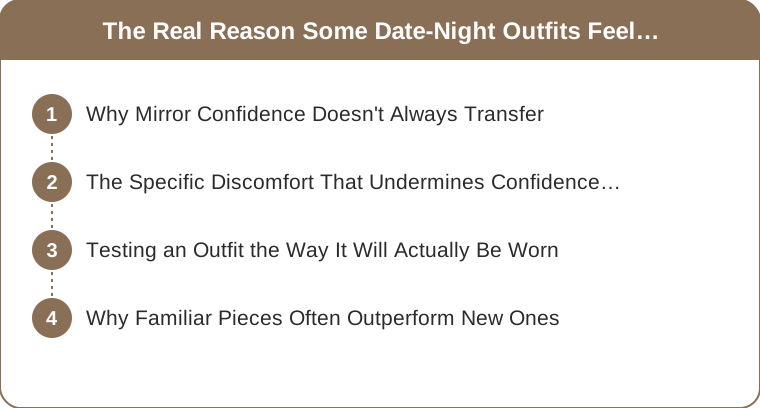
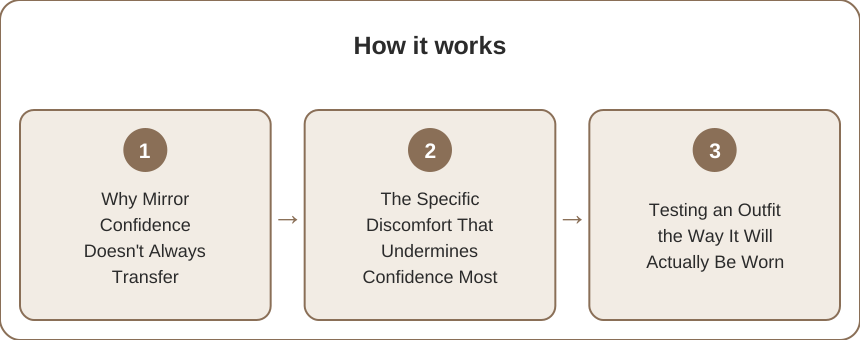
Why Mirror Confidence Doesn’t Always Transfer
The gap: an outfit evaluated only in a stationary mirror check missing how it actually performs across sitting, walking, and several hours of wear, which is where genuine discomfort tends to surface later on a real date.
The Specific Discomfort That Undermines Confidence Most
The common culprit: a waistband, shoe, or fabric that requires small, frequent adjustments throughout the evening, since that repeated self-conscious adjusting pulls mental attention away from the actual date and onto the outfit itself.

Testing an Outfit the Way It Will Actually Be Worn
The practical check: sitting down, walking around, and reaching for something while wearing a planned date outfit before the actual date, specifically to catch discomfort that a standing mirror check alone won’t reveal.
Why Familiar Pieces Often Outperform New Ones
The pattern: a previously worn, already-tested outfit frequently producing more genuine date-night confidence than a brand-new untested one, purely because the physical comfort variable is already a known quantity, and the frame (date-night confidence usually comes down to physical comfort tested under real conditions, sitting, walking, several hours of wear, rather than how the outfit looks in a stationary mirror check.)
An outfit that looks great in a mirror at home can still feel oddly deflating an hour into an actual date, and the gap usually isn’t about how the outfit looks, it’s a specific physical discomfort quietly working against confidence the whole time, since an outfit evaluated only in a stationary mirror check misses how it performs across sitting, walking, and several hours of real wear. A waistband, shoe, or fabric that requires small, frequent adjustments throughout an evening pulls mental attention away from the actual date and onto the outfit itself, which is often the real source of feeling less confident than expected. Sitting down, walking around, and reaching for something while wearing a planned date outfit before the actual date catches that kind of discomfort in a way a standing mirror check never will, which is also why a previously worn, already-tested outfit frequently produces more genuine confidence than a brand-new untested one, simply because the comfort variable is already a known quantity.
Keep Reading
This article is for general styling and informational purposes only. Trends, sizing, availability and pricing may vary by brand and season.